
Millimeter Wave Therapy for Pain Relief: Clinical Evidence, Mechanisms & Safety Guide
- winni
- July 07, 2026
- 4
- 0
- 0
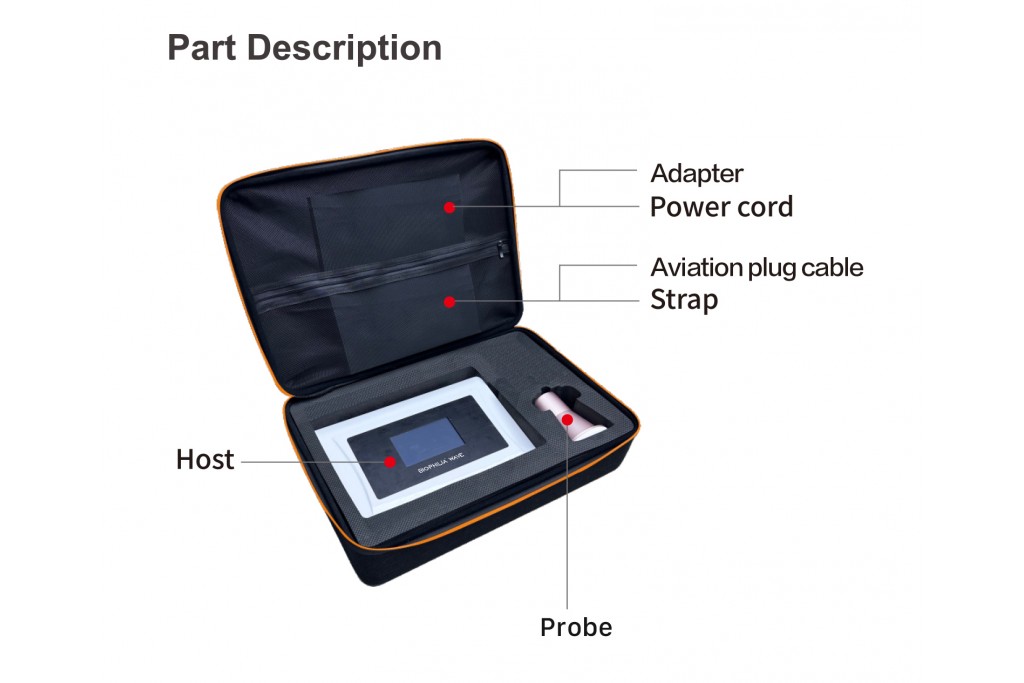
What Is Millimeter Wave Therapy & The Biophilic Effect?
Millimeter Wave Therapy (MWT) is a non-invasive complementary physical treatment that utilizes ultra-high frequency low-intensity electromagnetic radiation ranging from 30 to 300 GHz, with corresponding wavelengths of 1–10 mm
The term "biophilic" derives from the cellular resonance phenomenon observed in academia: the natural vibration frequency of human proteins and cell membrane macromolecules overlaps exactly with the 30–70 GHz band. Millimeter waves within this window can generate synchronous resonance with human cells, gently regulating cellular physiological activity—hence the name biophilic millimeter waves
It differs fundamentally from high-temperature thermal therapy devices widely available on the market. Standard clinical millimeter waves adopt a power density below 10 mW/cm², raising skin temperature by no more than 0.5 °C during exposure. This qualifies it as a non-thermal therapy
The technology originated from military radar research and was widely applied clinically across the former Soviet Union, Germany and Ukraine, with over 3 million patients receiving interventions. A systematic review published in Evidence-Based Complementary and Alternative Medicine (2006) summarized 13 clinical studies and confirmed measurable analgesic potential of millimeter waves.
Four Core Mechanisms Behind Millimeter Wave Analgesia
2.1 Cellular Resonance Repair to Alleviate Aseptic Inflammation
Most chronic joint and soft tissue pain stems from aseptic inflammation triggered by disrupted cellular metabolism. Biophilic millimeter waves calibrate cell membrane permeability and boost mitochondrial metabolic efficiency, reducing the release of pro-inflammatory factors such as TNF-α and interleukins to relieve chronic aseptic inflammation at the cellular level.
2.2 Activate Endogenous Analgesic System to Block Pain Signals Naturally
Multiple human and animal controlled trials prove millimeter wave exposure stimulates the body to secrete endogenous opioid analgesics like endorphins, directly intercepting pain signals transmitted to the spinal cord and brain.
Scientific verification:
Pre-treatment with naloxone (an opioid receptor antagonist) completely eliminates the pain-relieving effect of millimeter waves, confirming the endogenous analgesic pathway as its core working route.
2.3 Remote Therapeutic Effect: Acupoint Exposure Delivers Whole-Body Relief
The most distinctive feature of millimeter wave therapy is its remote efficacy. Instead of targeting painful lesions directly, irradiation on standard WHO acupuncture points (such as LI4 Hegu, ST36 Zusanli, GB20 Fengchi) transmits resonant signals via neural and humoral pathways to distant painful areas.
This characteristic aligns perfectly with meridian therapy theories in Traditional Chinese Medicine, explaining why acupoint irradiation is the dominant clinical protocol.
2.4 Bidirectional Immune Regulation & Improved Local Microcirculation
Millimeter waves balance the ratio of T and B lymphocytes in the body and lower C-reactive protein (CRP)
Meanwhile, it dilates superficial microvessels to accelerate the discharge of metabolic waste, mitigating joint stiffness, limb numbness and poor circulation.
Clinical Evidence: Six Types of Pain Responsive to Millimeter Wave Therapy
The review incorporated 9 Randomized Controlled Trials (RCTs) and 4 case series, covering diverse pain disorders.
3.1 Recurrent Headache Caused by Cerebrovascular Diseases & Hypertension
For headaches induced by cerebral atherosclerosis and hypertension:
Broadband 54–78 GHz millimeter waves are applied to body surface areas corresponding to the carotid sinus, with a treatment course of 4–6 sessions
Follow-up data shows:
- 65% maintained headache relief for one year
- Medication-only group: 20%
- Improved blood lipid profiles
- Increased T-lymphocyte counts
- Reduced dizziness and cranial pressure
3.2 Chronic Joint Pain: Osteoarthritis & Rheumatoid Arthritis
Primary Osteoarthritis
- 114 participants
- Medication vs Medication + Millimeter Wave Therapy
Results:
- Significant reduction in joint pain
- Reduced stiffness
- Lower CRP levels
- Improvements observed after 2–3 sessions
Juvenile Rheumatoid Arthritis
138 children participated.
The acupoint + lesion irradiation
Results:
- Average pain reduction: 50%
- Improved joint mobility: 80%
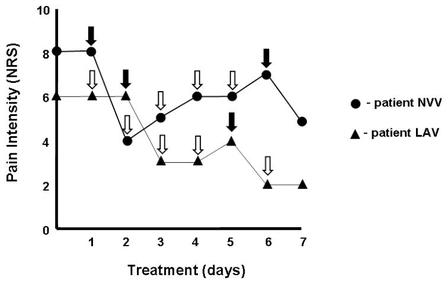
Double-Blind Rheumatoid Arthritis Trial
Only participants receiving genuine millimeter wave therapy experienced sustained pain reduction.
The sham treatment group showed no significant improvement, effectively ruling out placebo effects.
Figure 1. RA Pain Score Curve
3.3 Acute Post-Surgical Wound Pain
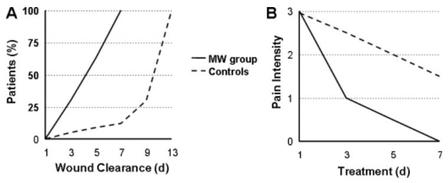
A double-blind controlled trial involving 141 abdominal surgery patients applied 37 GHz millimeter waves for 30 minutes daily over seven consecutive days
By postoperative Day 3:
- More than 90% reported significant pain reduction
- Faster wound healing
- Lower analgesic consumption
Figure 2. Wound Healing & Pain Relief Chart
3.4 Multiple Types of Neuropathic Pain
Trigeminal Neuralgia
- 52 patients
- Nearly 70% experienced reduced pain frequency and intensity
Advanced Cancer Neuropathic Pain
Most patients reported pain relief after the first treatment session, with gradual reduction of opioid medication, improved sleep and enhanced quality of life.
Post-Craniotomy Neuropathic Pain
Palm and sole irradiation:
- Eliminated postoperative cranial pain
- Stabilized alpha brain waves
- Reduced seizure incidence
3.5 Oral Mucosal Pain
Conditions included:
- Burning Mouth Syndrome
- Oral Lichen Planus
Clinical findings:
- Reduced pain scores
- Lower CD8+ T lymphocyte levels
Suitable for patients unable to tolerate long-term anti-inflammatory medication.
3.6 Experimental Pain Model
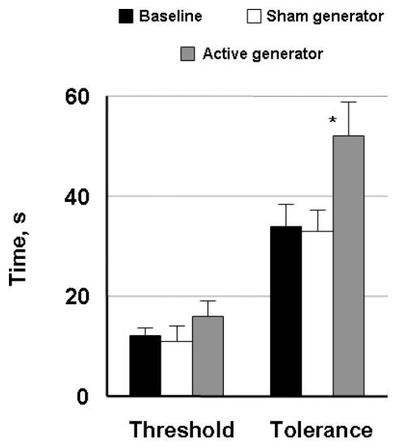
A double-blind crossover cold pressor study involving 12 healthy volunteers used 42.25 GHz irradiation.
Results:
- Pain tolerance increased 38%
- Pain perception threshold increased nearly 50%
- Heart rate remained stable
- Blood pressure remained stable
Figure 3. Experimental Pain Threshold & Tolerance Data
Safety Profile of Millimeter Wave Therapy
Across all reviewed clinical studies:
✅ No burns
✅ No ionizing radiation damage
✅ No visceral injury
✅ No documented drug interactions
Reported temporary reactions include:
- Mild tingling
- Gentle warmth
- Temporary drowsiness
- Relaxation during treatment
These effects typically resolve within minutes after therapy.
Current Clinical Research Limitations
Although encouraging, current evidence also has important limitations.
- Only 3 of 9 RCTs achieved high methodological quality.
- Most studies involved relatively small sample sizes.
- No universally accepted treatment protocol currently exists.
- Mechanisms underlying remote therapeutic effects require further investigation.
- Millimeter wave therapy should currently be regarded as a complementary therapy, rather than a replacement for medication or surgery.
Future research is expected to focus on:
- Broadband vs fixed-frequency comparison
- Acupuncture point mechanisms
- Standardized treatment protocols
- Large multicenter clinical trials
Suitable Candidates for Millimeter Wave Therapy
This therapy may be considered for individuals with:
- Chronic neck and back pain
- Osteoarthritis
- Rheumatoid arthritis
- Postoperative wound pain
- Slow tissue healing
- Migraine
- Cerebrovascular headache
- Trigeminal neuralgia
- Post-herpetic neuralgia
- Cancer-related neuropathic pain
- Burning Mouth Syndrome
- Oral Lichen Planus
- Poor circulation
- Limb numbness
- Chronic inflammatory pain
- Insomnia associated with chronic pain
- Individuals seeking non-pharmacological complementary pain management
References
- Evidence-Based Complementary and Alternative Medicine. Millimeter Wave Therapy for Pain Management: A Review of Clinical Studies (2006).
- World Health Organization (WHO). Standard Acupuncture Point Locations.
- Clinical studies on osteoarthritis, rheumatoid arthritis, postoperative pain, trigeminal neuralgia and oral muco