
Cold Laser Therapy Device: LLLT for Humans & Pets
- winni
- October 10, 2026
- 2
- 0
- 0
When muscle soreness, joint discomfort or everyday physical strain starts getting in the way of daily life, many people look for non-invasive options that can complement their existing recovery routine.
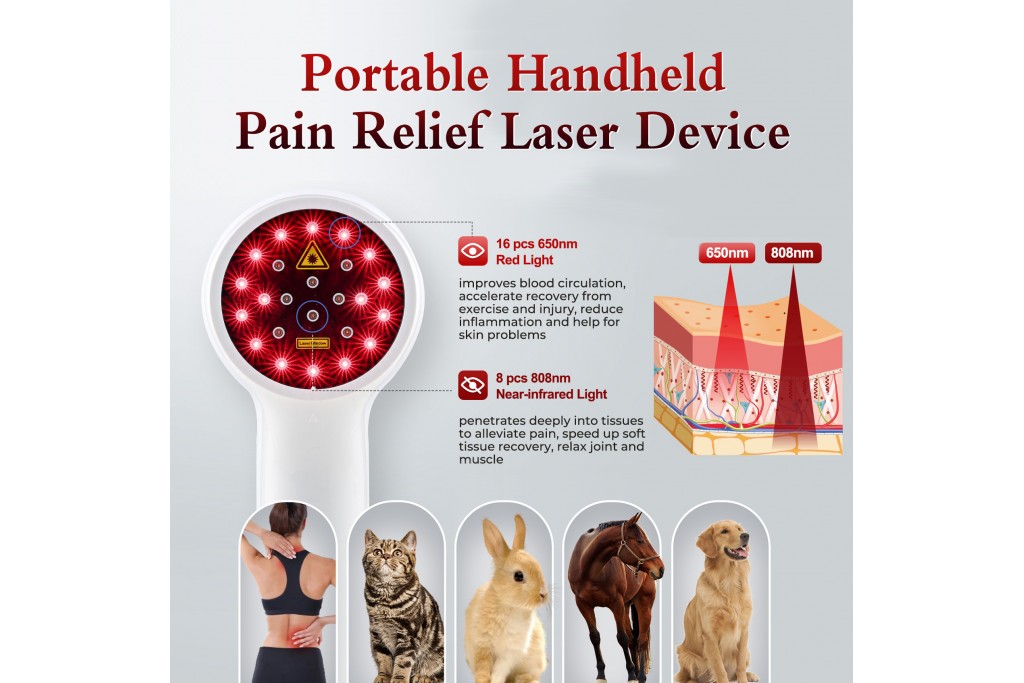
A cold laser therapy device, also known as a low-level laser therapy (LLLT) device, uses low-intensity light to provide targeted wellness and recovery support. With 650nm red laser light and 808nm near-infrared light, a portable handheld device can be used for different areas of the body and, under professional guidance, for companion-animal care.
From everyday muscle soreness to joint discomfort and post-exercise recovery, cold laser therapy has become an area of interest for people looking for convenient light-based support at home.
Disclaimer: Cold laser therapy should be considered an adjunctive wellness and rehabilitation approach. It does not replace professional medical or veterinary diagnosis, medication, surgery or other prescribed treatment. Consult an appropriate healthcare professional before use when necessary.
What Is a Cold Laser Therapy Device?
A cold laser therapy device delivers low-level laser light to targeted areas without relying on high heat. It is commonly associated with Low-Level Laser Therapy (LLLT) and photobiomodulation.
The device featured here combines two wavelengths:
- 650nm red laser light
- 808nm near-infrared laser light
These wavelengths are positioned differently within the device to provide different light-delivery characteristics.
The 650nm red light is primarily intended for more superficial areas, while 808nm near-infrared light is designed to reach deeper tissue areas.
This dual-wavelength design makes a portable LLLT device suitable for a variety of recovery and wellness applications involving muscles, joints and superficial tissue.
650nm vs. 808nm: What Is the Difference?
One of the most important features to consider when choosing a cold laser therapy device is wavelength.
650nm Red Laser Light
The device uses 16 pieces of 650nm red light.
Red light is visible to the human eye and is generally associated with superficial light applications involving the skin and soft tissue.
Potential applications include:
- Supporting superficial tissue recovery
- Supporting local circulation
- Skin and soft-tissue wellness
- Recovery after minor physical strain
- Targeted light-based care
Because 650nm light is visible, the red light can normally be seen during operation.
808nm Near-Infrared Laser Light
The device also contains 8 pieces of 808nm near-infrared light.
Unlike 650nm red light, 808nm light is largely invisible to the human eye. It is designed for deeper light delivery and is commonly associated with applications involving muscles, joints and deeper soft tissue.
Potential applications include:
- Muscle recovery support
- Joint comfort
- Exercise recovery
- Soft-tissue recovery
- Relaxation of tight muscles
Important: Because 808nm near-infrared light may not be visible, the absence of visible red light does not necessarily indicate that the device is not operating. Avoid looking directly into the laser aperture and follow the product's eye-safety instructions.
Cold Laser Therapy Benefits for Humans
A major reason people search for a cold laser therapy device is to find a convenient way to complement their existing recovery routine.
Support for Muscle Soreness
Long hours at a desk, repetitive movements and exercise can all contribute to muscle tightness and soreness.
Targeted LLLT may be used as part of a recovery routine for areas such as:
- Neck and shoulders
- Lower back
- Arms and wrists
- Legs
- Muscles after exercise
The portable handheld design also makes it easier to target specific areas rather than relying on a large fixed system.
Support for Joint Comfort
Joint discomfort can affect everyday movement and exercise.
Cold laser therapy is commonly explored as an adjunctive approach for areas such as:
- Knees
- Elbows
- Wrists
- Shoulders
- Ankles
- Fingers
It should not be considered a replacement for professional assessment when persistent or unexplained pain is present.
Exercise & Sports Recovery
For people who regularly exercise, recovery is just as important as training.
A portable LLLT device can be incorporated into a post-exercise wellness routine to support muscle relaxation and recovery following physical activity.
This makes a handheld cold laser device particularly interesting for:
- Fitness enthusiasts
- Athletes
- Active adults
- People with physically demanding lifestyles
Cold Laser Therapy for Dogs, Cats & Other Pets
Cold laser therapy is not limited to human applications. Veterinary professionals may also use light-based therapy as part of rehabilitation and supportive care for companion animals.
Under veterinary guidance, LLLT may be incorporated into a broader rehabilitation plan to support:
- Joint comfort
- Muscle relaxation
- Mobility
- Recovery after physical activity
Skin & Superficial Tissue Support
The 650nm red laser can be used for applications involving superficial tissue and skin-related wellness.
For pets, professional guidance is particularly important because treatment areas, coat thickness and individual conditions can vary significantly.
Recovery Support
Veterinary rehabilitation programs may combine light-based therapy with other approaches to support recovery following injury or procedures.
For animals, treatment should always be performed according to veterinary recommendations.
Important: Fur can affect light delivery. The appropriate treatment area and positioning should be determined according to veterinary guidance.
Portable Handheld Design for Targeted Use
Another important advantage of this portable cold laser therapy device is its handheld format.
Instead of being restricted to a large treatment system, the device can be positioned directly over the desired area.
This makes it suitable for targeted applications involving:
- Neck
- Shoulders
- Back
- Arms
- Knees
- Legs
- Other localized areas
The compact handheld design can also make it easier to incorporate light-based therapy into a regular recovery routine.
Dual-Wavelength Cold Laser Therapy in One Device
The combination of 650nm and 808nm wavelengths is one of the main product features.
650nm
Visible red laser light
Designed primarily for more superficial applications involving skin and soft tissue.
808nm
Near-infrared laser light
Designed for deeper light delivery and applications involving muscles, joints and deeper soft tissue.
Together, the two wavelengths provide a broader range of targeted light applications in one handheld device.
Continuous & Pulsed Light Modes
The device provides different operating modes to accommodate different applications.
Continuous Mode
Continuous output provides a steady delivery of light.
It may be selected when consistent light delivery is preferred for a specific application.
Pulsed Mode
The pulsed mode delivers light intermittently.
This mode may be useful when incorporating the device into routines focused on muscle and joint comfort.
Rather than assuming that one mode is appropriate for every condition, users should follow the manufacturer's recommended settings and professional guidance when applicable.
Adjustable Power & Timer Settings
The device offers three power levels: L / M / H, corresponding to approximately 50%, 75% and 100% output.
This allows users to adjust the intensity according to the application and individual tolerance.
It also features an adjustable timer ranging from 5 to 60 minutes, providing flexibility for different treatment areas and routines.
The memory function can retain the previous operating settings, making repeated use more convenient.
Why Choose a Portable LLLT Device?
A handheld cold laser device can be appealing for users who want a more flexible approach to light-based recovery support.
Key Features
- 650nm red laser light
- 808nm near-infrared laser light
- 16 × 650nm light sources
- 8 × 808nm light sources
- Continuous and pulsed modes
- Three adjustable power levels
- 5–60 minute timer
- Memory function
- Portable handheld design
- Suitable for targeted human applications
- Can also be used in animal rehabilitation settings under professional guidance
Cold Laser Therapy: Safety & Important Considerations
Although cold laser therapy is generally considered a non-invasive approach, it should not automatically be assumed to be suitable for everyone.
Extra caution is recommended for people who:
- Are pregnant or trying to conceive
- Are taking photosensitizing medication
- Have photosensitive conditions
- Have certain blood or coagulation disorders
- Have implanted electronic medical devices
- Have suspected malignant lesions
- Have an active infection
- Have other medical conditions requiring professional evaluation
For children and pets, professional guidance is especially important.
Never look directly into the laser aperture. Near-infrared 808nm light may be invisible even though the device is operating.
When in doubt, consult a qualified healthcare professional or veterinarian before using the device.
Frequently Asked Questions About Cold Laser Therapy
Is cold laser therapy the same as LLLT?
Cold laser therapy is commonly used to describe Low-Level Laser Therapy (LLLT), a light-based approach using low-intensity laser light.
What is the difference between 650nm and 808nm?
650nm is visible red light generally used for more superficial applications, while 808nm is near-infrared light designed for deeper light delivery.
Can I use a cold laser therapy device at home?
Portable LLLT devices are designed for convenient targeted use, but appropriate settings and applications depend on the individual and the device. Follow the manufacturer's instructions and seek professional advice when necessary.
Can cold laser therapy be used for pets?
Light-based therapy may be incorporated into veterinary rehabilitation and supportive care. Pet use should be guided by a veterinarian, particularly for existing medical conditions, injuries or post-operative recovery.
Why can't I see the 808nm light?
808nm near-infrared light is largely invisible to the human eye. This is normal and does not necessarily indicate a malfunction.
Can cold laser therapy cure arthritis?
Cold laser therapy should not be presented as a cure for arthritis. It may be used as an adjunctive approach for comfort and rehabilitation, depending on the individual situation.
Cold Laser Therapy Device for Targeted Recovery Support
A portable cold laser therapy device combines convenience with targeted light delivery, making it an interesting option for people exploring non-invasive recovery and wellness technologies.
With 650nm red laser and 808nm near-infrared laser, adjustable power, continuous and pulsed modes, and a portable handheld design, the device can support a range of targeted applications involving muscles, joints and superficial tissue.
Its potential use in human and veterinary rehabilitation also makes it a versatile option for professional wellness, rehabilitation and animal-care environments.
The key is to view LLLT as a supportive therapy rather than a replacement for professional medical or veterinary care.